Forte Seal Conditioner
Blue smoke
from your
exhaust?
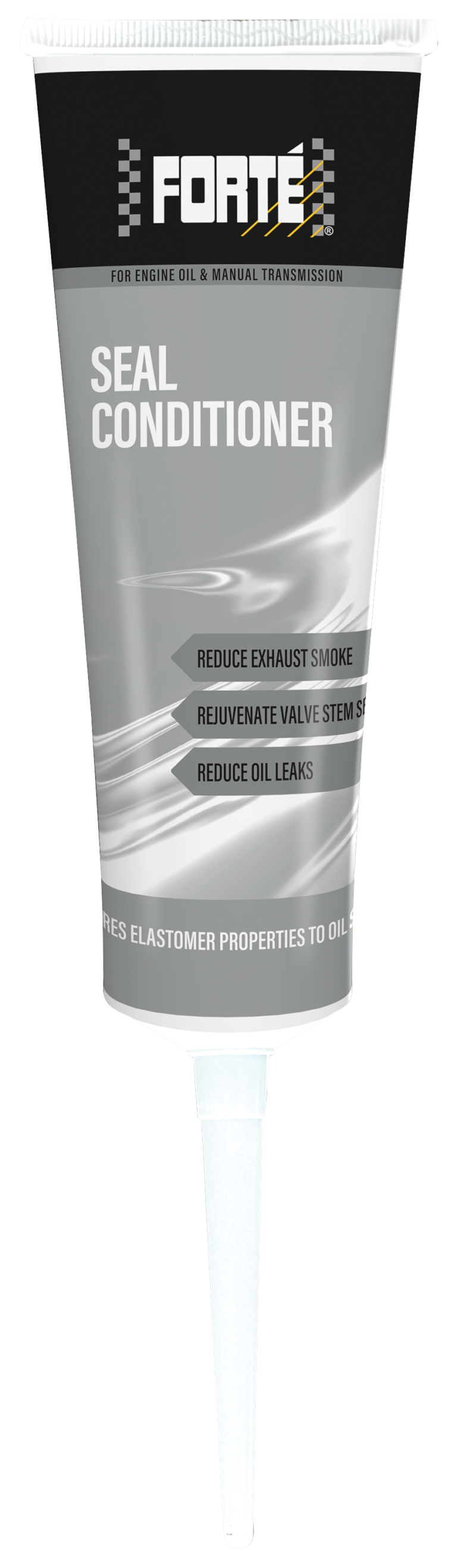
Blue smoke on startup, after idle or when pulling away is often oil burning past worn valve stem seals. Forte Seal Conditioner is the UK oil additive for valve stem seals worth trying first — add it to the existing oil and drive.
Do any of these sound familiar?
Use the smoke pattern: startup, after idle, pulling away, overrun, accelerating under load, and whether there is a burning oil smell from the exhaust.
Before you book the car in and spend hundreds — or thousands — on a workshop repair, Forte Seal Conditioner is always worth trying first.
It works by soaking into hardened rubber valve stem seals and restoring their flexibility. Around 80% of people see improvement. If it works, you've saved a fortune. If it doesn't, the workshop repair is still there.
Forte Seal Conditioner: Oil Additive For Valve Stem Seals
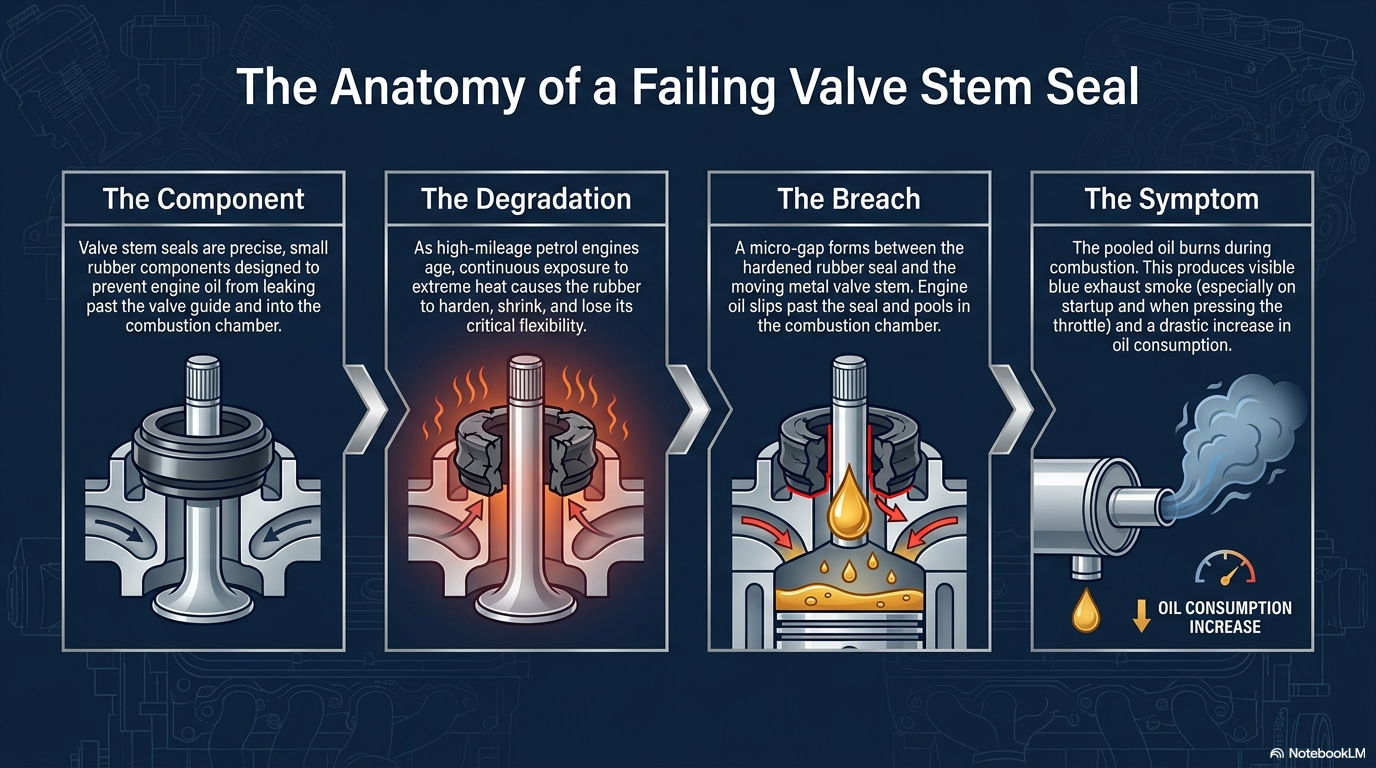
Valve stem seals are small rubber components that sit at the top of each valve guide. Their job is to stop engine oil from leaking down into the combustion chamber. When they wear out they harden, shrink and lose their shape — oil leaks past them, burns in the combustion chamber and gives you blue smoke from the exhaust.
Forte Seal Conditioner soaks into the hardened rubber and restores its flexibility and original size. As this valve stem seal conditioner works its way around the engine in the oil, the seals gradually swell back towards their original dimensions and start sealing properly again.
On this page, keep the scope tight: the problem is blue smoke from oil passing worn valve stem seals in an engine. It is not an automatic gearbox treatment, and it is not a cure for piston-ring wear or physically broken seals.
Valve Stem Seal Symptoms: Blue Smoke On Startup, After Idle And Pulling Away
The useful clue is not just that the smoke is blue. It is when it appears. If you are checking worn valve stem seals symptoms, look for a puff after the engine has been sitting, idling in traffic, lifting off the throttle on the overrun, or pulling away again. That is the pattern Forte Seal Conditioner is aimed at.
- ✓Blue smoke on startup Oil seeps past hardened seals while the engine is stopped, then burns as a short blue cloud when the engine starts.
- ✓Blue smoke after sitting in traffic, after idle or blue smoke when pulling away Oil can collect while the engine idles. When you pull away, the engine burns that oil and the smoke appears behind the car.
- ✓Blue exhaust smoke on overrun Lifting off from speed can draw oil past tired seals. A puff when you accelerate again after the overrun is a strong valve-seal clue.
- →Blue smoke from exhaust when accelerating A short puff after idle or overrun can fit valve seals. Constant blue smoke under load points more towards piston rings, so check the pattern before buying.
- →Burning oil smell from exhaust This means oil is being burned. Valve stem seals are one possible cause because they let oil leak into the combustion chamber.
Does Forte Seal Conditioner Work?
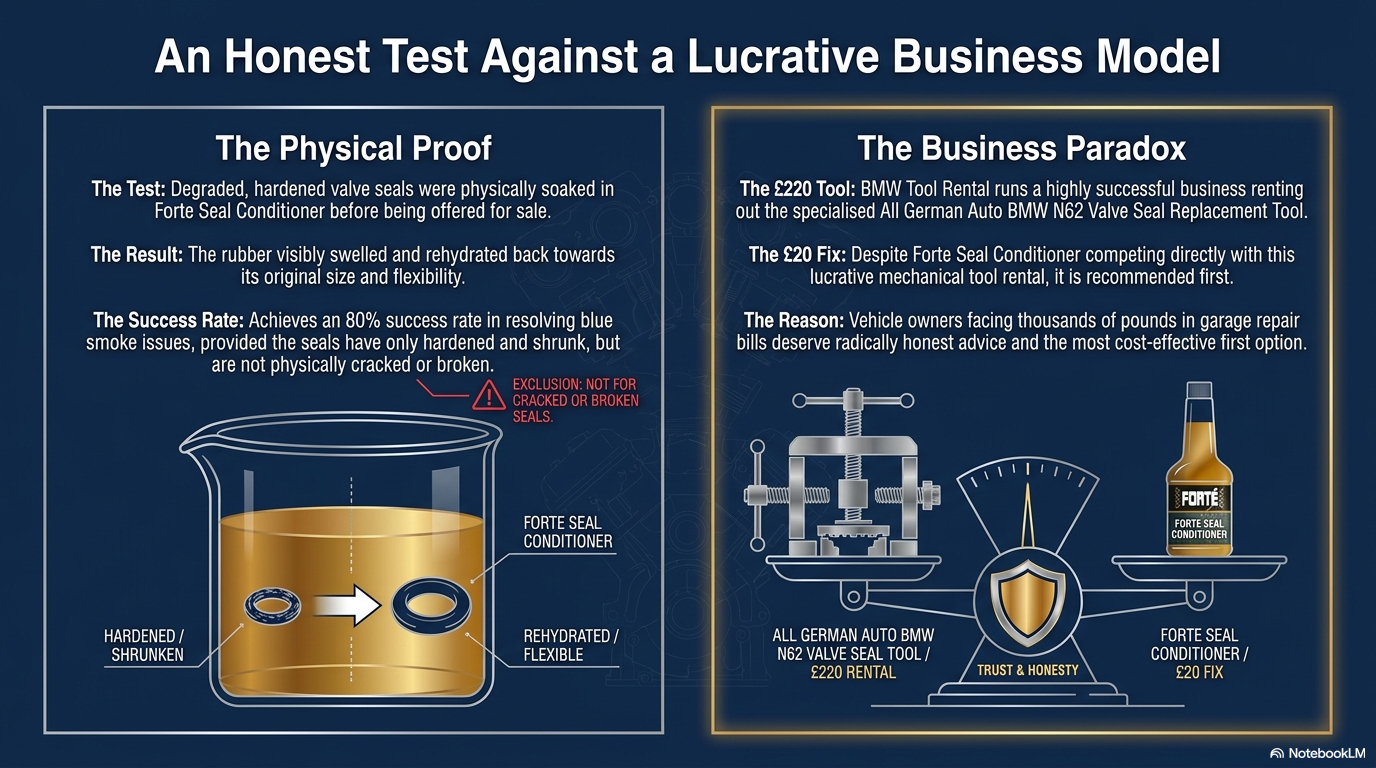
Around 80% success rate — that's the honest number. Phil soaked valve seals in the product and photographed the results before ever offering it for sale. The rubber visibly swelled back towards its original size. The before and after photos are on his Facebook page.
The 20% it doesn't work for? Their seals are either physically cracked or broken rather than just hardened — and no fluid in the world will fix a physically damaged seal. That needs mechanical replacement.
If you're not sure which camp you're in, contact Phil. He'll give you an honest read on whether it's worth trying based on your symptoms — including telling you if he thinks the seals are too far gone.
What Are These Fault Codes —
and Can Forte Seal Conditioner Help?
Worn valve stem seals don't usually trigger a code on their own — but the oil they let through burns in the combustion chamber, and that knock-on damage is what lights up the dash. If you're seeing any of these alongside blue smoke, hardened seals are a likely root cause.
-
P0420
Catalyst System Efficiency Below Threshold (Bank 1) Oil burning past worn valve seals coats and degrades the catalytic converter, dropping its efficiency below the threshold the ECU expects. Forte Seal Conditioner treats the root cause — stop the oil getting through and you stop poisoning the cat. Secondary code.
-
P0430
Catalyst System Efficiency Below Threshold (Bank 2) The same fault as P0420 but on the second bank of a V-configuration engine — common on the BMW N62 V8. Oil contamination is killing the cat on that bank. Restore the seals and you remove the source. Secondary code.
-
P0301
–P0308Cylinder 1–8 Misfire Detected When seals are badly worn, enough oil can pool on a cylinder to foul the plug and cause a misfire on that specific cylinder. The code number tells you which cylinder (P0301 = cylinder 1, and so on). Clearing the oil at source lets the plug fire cleanly again. Secondary code. -
P0300
Random / Multiple Cylinder Misfire Oil reaching several cylinders at once shows up as a random misfire rather than one specific cylinder. Worth checking seals if it appears with blue smoke and rising oil consumption. Secondary code.
Not sure if your code is seal-related? Send Phil your fault code and a description of the smoke — he'll give you an honest read on whether Forte Seal Conditioner is worth trying first, or whether it's pointing at something else.
What Won't Forte Seal Conditioner Fix?
We'd rather be upfront about this than have you spend £18 on something that won't help your situation.
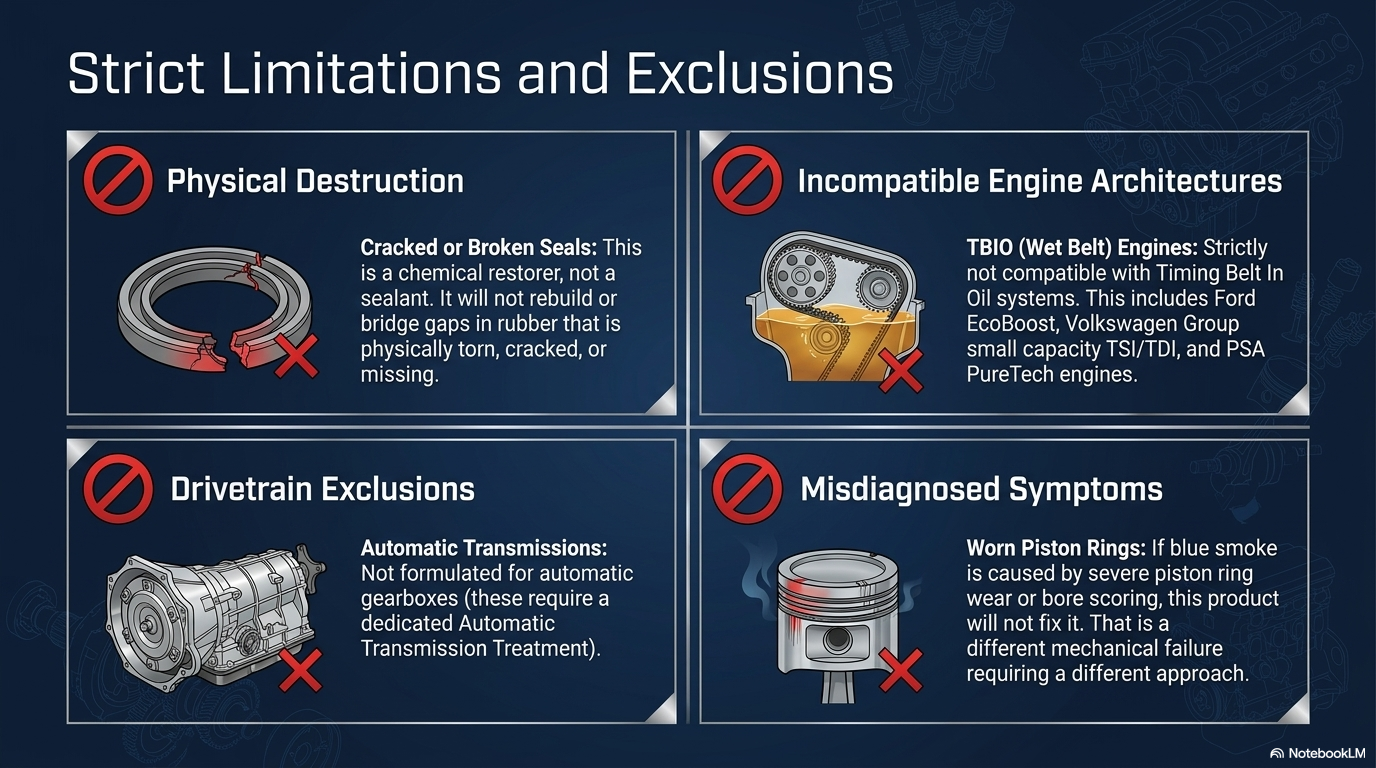
- ✗Physically cracked or broken seals If the seals have gone beyond hardening to actually cracking or breaking, the only fix is mechanical replacement. Forte Seal Conditioner restores — it can't rebuild.
- ✗TBIO wet belt engines Not suitable for Ford EcoBoost, VW Group small capacity TSI/TDI, or PSA PureTech engines. These use a timing belt that runs in the oil and requires specific oil chemistry.
- ✗Piston ring smoke Blue smoke from worn piston rings is a different problem entirely. Piston ring smoke tends to appear constantly under load — not just on startup, after idle, pulling away or the overrun. If yours smokes continuously when accelerating hard, the diagnosis might be different.
- ✗Automatic transmissions Engine crankcase oil only. Not for automatic gearboxes.
Additive Or Tool? How To Tell Which One You Need
Forte Seal Conditioner is not an oil thickener — it doesn't change the oil's viscosity. It works by softening and swelling the hardened rubber seal back towards its original size so it grips properly again. If you're looking for something that thickens the oil itself to slow a leak, that's a different product — Forte Oil Fortifier — and the two are sometimes used together, Oil Fortifier first for a day, then Forte Seal Conditioner.
If you're the sort of buyer who checks a forum before spending £18, the honest version is already above: an ~80% success rate that Phil tested and photographed on his own seals before he ever sold a bottle, plus 22 verified, named reviews further down this page — not anonymous forum chatter.
The 20% it doesn't fix comes down to one thing: whether the seals are hardened or physically broken. That's the whole decision.
- ✓Seals hardened, not broken Try Forte Seal Conditioner first — £18, no dismantling, results in 2-8 weeks
- ✗Seals physically cracked or broken No additive can rebuild a broken seal — see "What Won't Forte Seal Conditioner Fix?" above
How Do I Use Forte Seal Conditioner?
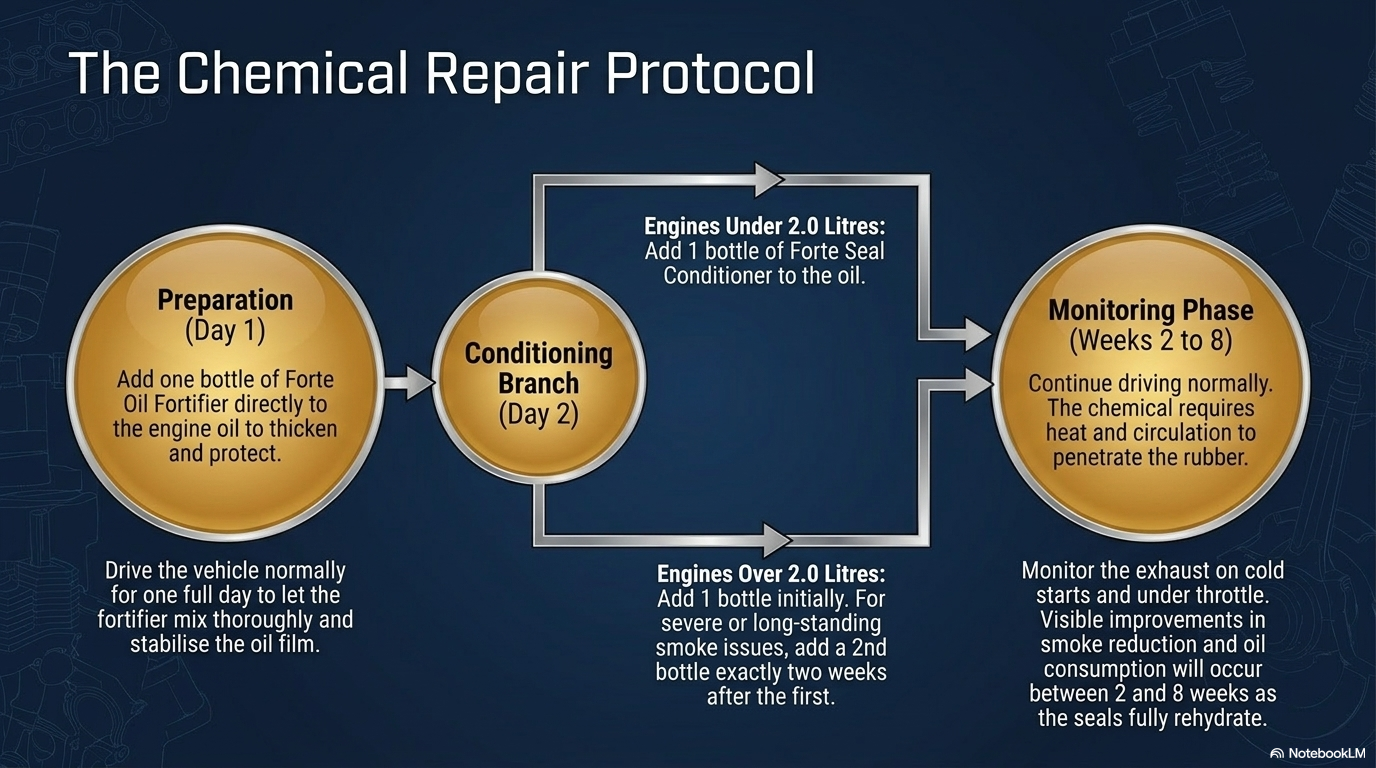
Add Forte Seal Conditioner to the engine oil, then drive normally and monitor the blue smoke pattern on startup, after idle and on the overrun over the next 2-8 weeks.
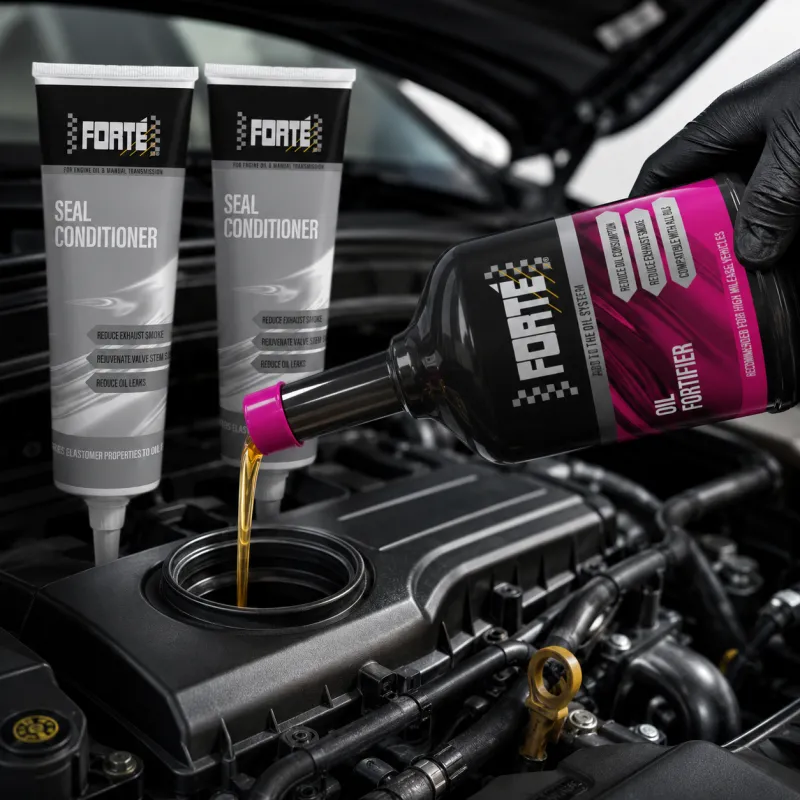
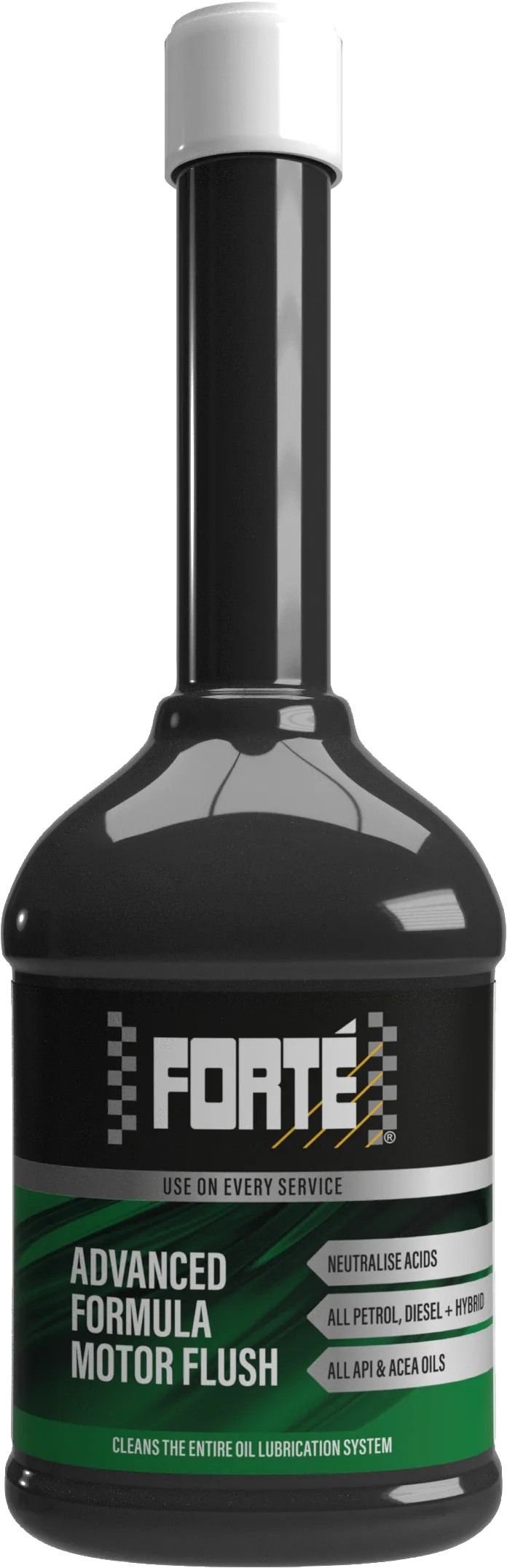
If you are doing an oil change at the same time, Forte Advanced Formula Motor Flush belongs before the oil change and is drained out with the old oil. For valve stem seal smoke, the source-backed best practice is Forte Oil Fortifier first, then drive normally for one day before adding Forte Seal Conditioner.
For long-standing smoke issues, give the treatment time before deciding it has failed. If there is no improvement and the car still smokes in the same pattern, the seals may be physically damaged or the diagnosis may be different.
- ✓No drain required Add to the existing oil in the engine right now — no oil change needed first
- ✓Works with all oil types Conventional, semi-synthetic and fully synthetic — it doesn't matter which you're running
- ✓Monitor over time Watch the startup, idle and overrun smoke pattern over the following weeks
How To Use Forte Seal Conditioner — Video
A practical walkthrough of using Forte Seal Conditioner. If you've got questions after watching, contact Phil — he's used this product himself and will give you a straight answer.
Is Forte Seal Conditioner Worth It?
At £18 with free UK delivery — yes, always. It's the obvious first step before booking a workshop repair.
If it works you've saved potentially hundreds or thousands. If it doesn't — and for around 1 in 5 people it won't — you've lost £18 and the repair is still there waiting. That's a bet worth taking.
Phil sells it with that honesty upfront. It's not a guaranteed fix — it's the right first step. And if it doesn't resolve it on a BMW N62, he rents the AGA valve seal tool kit for the mechanical approach.
- ✓~80% success rate Where seals are hardened and shrunk — not physically broken
- ✓No dismantling Add to existing oil and drive — that's it
- ✓Results in 2-8 weeks Most customers notice improvement within 2 to 3 weeks; full process can take up to 2 months
- ✓Engine oil focus This page is about engine oil smoke from valve stem seals, not gearbox, diff, transfer box or clutch applications
- ✗Not for TBIO engines or autos Ford EcoBoost, VW TSI/TDI small capacity, PSA PureTech — not compatible
Rated 5 stars by
22 customers.
Questions people ask
before they order.
Stop blue smoke from exhaust
before booking
the workshop repair.
~80% success rate. No dismantling. Free UK delivery. Tested by Phil before going on sale.
Order Forte Seal Conditioner — £18 →- →Forte Oil Fortifier Recommended first for valve stem seal smoke: add Oil Fortifier, drive normally for one day, then add Seal Conditioner.
- →Forte Advanced Formula Motor Flush Use before your next oil change to clean out the oil system first. It is drained out with the old oil before Seal Conditioner is added.
- →Forte Oil System Protector After the oil change — helps keep the oil clean and stable through to the next service interval.
Use alongside these products.
Is Forte Seal Conditioner The Best Valve Stem Seal Additive?
Searches for a valve stem seal additive, valve seal additive, stem seal treatment or valve stem oil seals treatment are all looking for the same type of product: an oil additive that conditions hardened rubber valve stem seals rather than replacing them by hand. Forte Seal Conditioner is that type of product — a valve stem seal conditioner, not a mechanical kit and not an automatic gearbox or automatic transmission treatment.
There is no single best valve stem seal additive or best valve stem seal conditioner that suits every car. The honest answer comes down to two things: getting the dose right for your engine, and being realistic about whether your seals are hardened (which an additive can help) or physically cracked, torn or broken (which Forte Seal Conditioner cannot rebuild — see what it cannot fix above).
Get the dose right, give it the full monitoring window, and be honest about the diagnosis — that combination decides whether any valve stem seal conditioner works for you, not the brand on the bottle.
- ✓Engines under 2.0 litres One bottle of Forte Seal Conditioner added straight to the existing engine oil is the standard dose.
- ✓Engines over 2.0 litres Add one bottle first and drive normally for a few days. If the blue smoke persists, add a second bottle.
- →Not sure of your engine size? Check your logbook (V5C) or ask Phil before you order — he'll confirm the right dose and whether a valve stem oil seal treatment is the right call for your symptoms.
Reading the smoke
Blue smoke from the exhaust: what it means and how to stop it
Blue smoke from the exhaust is almost always engine oil being burned in the combustion chamber. The useful clue is not the colour — it is when the smoke appears. On most engines that timing points to one cheap-to-treat cause: worn valve stem seals.
When the blue smoke appears
Valve-seal blue smoke is a puff that follows a pattern, not a constant haze. If your smoke matches these, hardened valve stem seals are a strong suspect:
- Blue smoke on startup — oil seeps past the seals while the car stands, then burns as the engine first fires, especially after sitting overnight.
- Blue smoke after idle, after sitting in traffic, or when pulling away — oil collects past the seals while the engine idles, then burns as you open the throttle and move off.
- Blue smoke from exhaust when accelerating — a short puff as you accelerate after idle or on the overrun fits valve seals. Constant blue smoke under hard load points more towards worn piston rings.
- Rising oil use with no visible leak — if the oil level drops but nothing is on the driveway, it is being burned in the chamber.
Why worn valve stem seals cause it
A valve stem seal is a small rubber seal at the top of each valve guide that controls the oil around the moving valve stem and stops the rest of the engine's oil draining into the combustion chamber. With age and heat the rubber hardens and shrinks, a gap opens, and oil leaks past the guide into the combustion chamber where it burns with the fuel — that burning oil is the blue smoke. Left long enough it can also coat the catalytic converter (P0420 / P0430) or foul a plug and cause a misfire, so stopping the oil at the seal removes the root cause rather than chasing those codes.
Blue smoke that is not valve seals
Before treating it, rule out the other causes — it saves money if the diagnosis is different:
- Worn piston rings — a constant blue haze under load and acceleration, rather than a puff after idle. A seal additive will not fix ring wear.
- Head gasket — smoke that is white and sweet-smelling, often with coolant loss, is a different fault entirely.
How to stop blue smoke from worn valve stem seals
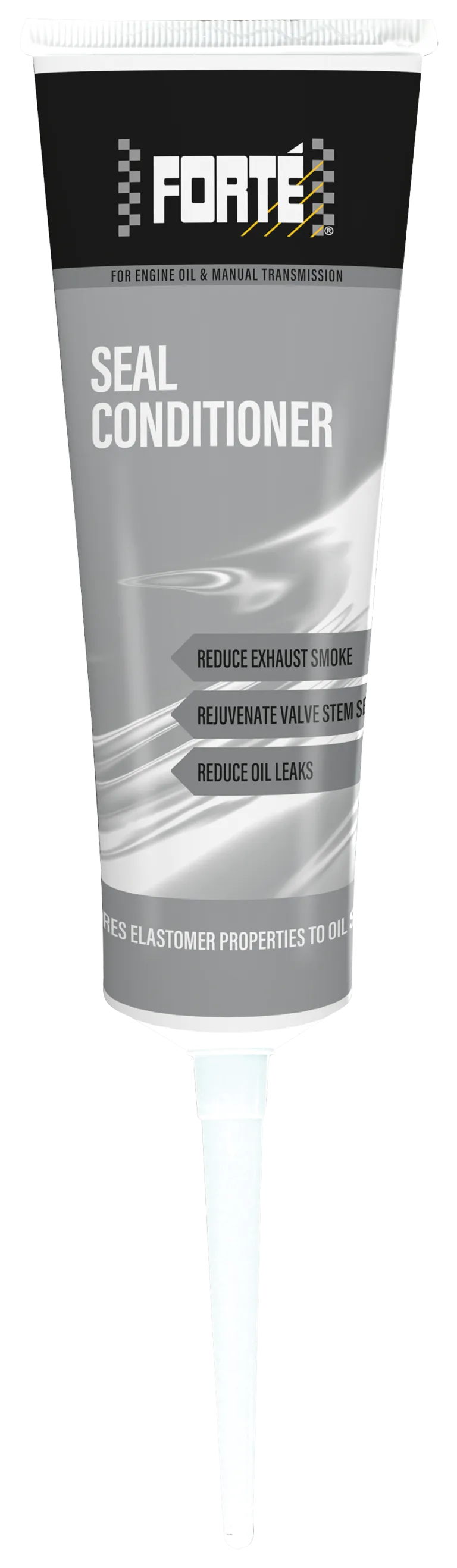
If the pattern fits hardened seals, Forte Seal Conditioner is added straight to the engine oil and soaks into the hardened rubber, restoring its flexibility so the seal swells back towards its original size and closes the gap — without dismantling the engine. It works on hardened or slightly shrunken seals (around 80% of those cases improve), takes 2 weeks to 2 months of normal driving, and at £18 is the low-cost step worth trying before a mechanical strip. It will not rebuild a cracked, torn or broken seal, and it will not stop blue smoke from worn piston rings. It is not for automatic transmissions or TBIO / wet-belt engines. See Forte Seal Conditioner.
Take A Look At Our 5 Star Reviews For Forte Seal Conditioner
At BMW Tool Rental, we pride ourselves on providing excellent customer service and offering honest and reliable advice to our customers. We understand that when it comes to your car, you want to ensure that you are using the right products and getting the right advice. That's why we take the time to listen to our customers, understand their concerns, and provide the best possible solution.
Our forte seal conditioner has received numerous 5-star reviews from our satisfied customers, who have found our product to be effective in reducing engine oil leaks and stopping blue smoke caused by worn valve seals. However, we don't just rely on product reviews to show our commitment to customer satisfaction. We offer a personal touch that sets us apart from other retailers.
If you have any questions about our products or services, we encourage you to reach out to us. We're always happy to help and provide you with the information you need to make the right decision. Whether you're looking to rent our AGA valve seal tool or purchase our forte seal conditioner, we're here to help.
Clements Trading Ltd
82a James Carter Road
Mildenhall, Bury St Edmunds
Suffolk, IP28 7DE
BMW Tool Rental
63 Purcell Avenue
Lichfield
Staffordshire, WS13 7PH
Clements Trading Ltd trading as BMW Tool Rental. Registered in England & Wales, company no. 10629836. Registered office: 82a James Carter Road, Mildenhall, Bury St Edmunds, Suffolk, IP28 7DE.
BMW Tool Rental is an independent specialist supplying tool hire and Forte automotive additives. We are not affiliated with, authorised by, or endorsed by BMW AG. "BMW" is a trademark of BMW AG and is used here for descriptive/compatibility purposes only.
© Clements Trading Ltd. All rights reserved.